
The Lafayette County Most Wanted Program
The Lafayette County Sheriff's Office runs its Most Wanted feature through both the official website and the agency's mobile app. Think of it as a curated feed. The sheriff picks certain matters for public attention and posts them there, and nothing more. Court records run far wider than that feed, so treat the page as an agency publication rather than a legal-status search of active warrant records. The official Lafayette County Sheriff's Office site is the place to see the current channel for yourself. Names, photographs, mugshots, addresses, and charges stay solely on that official source, where the agency controls corrections and removals. This page republishes none of it.
Lafayette Sheriff Feed Configuration
The app's own manifest describes the feature as a blog-style list. Public search and sorting are switched off. The display holds ten entries, the underlying feed runs by date descending, and the date shown is hidden. No type filter, status filter, export control, or public confirmation button exists. Use the official Most Wanted feed only as the Lafayette County sheriff's selected publication.
Program boundary: A ten-entry display setting describes the app presentation. It is not an official count of active warrants, wanted people, arrests, or unresolved Lafayette County cases.
There is no name-search control either. You cannot test your own status by typing a name, and scanning the limited feed is no Lafayette County warrant check at all.
How the Lists Work
A most-wanted feature highlights matters the publishing agency chooses to spotlight. An active warrant is different. It comes from a court and can sit in the warrant records without ever making the feed. Lafayette County publishes no selection standards, no promised update interval, no completeness notice, and no removal cycle for the list. Entries can change after an arrest, a surrender, a recall, or a correction, and no local cadence is guaranteed. So the feed is a snapshot, nothing more. An absent name does not mean no warrant exists, and a name still displayed does not prove the process is live right now. Only the issuing court can confirm legal status.
The Ten-Item Limit Matters
That ten-item display limit invites misreading. It caps what the app shows, not how many warrants exist. A blank result, a missing name, or a feed change cannot clear a warrant, and a similar name or image is not identity confirmation. Lafayette County offers no official public search of all active warrants. Search ARCourts gives case information rather than a working sheriff warrant roster. The official inmate search reports custody, not unserved warrants. Three separate records, three separate questions.
How to Report a Tip Safely
The sheriff app includes a general Submit A Tip form for information on an ongoing investigation. It asks for an incident narrative plus a date or time, takes optional contact details, and permits location information. The form itself says the route is not for a crime in progress. For an emergency in Lafayette County, call 911.
- Use the official sheriff tip form, rather than a personal social-media message or an unofficial roster.
- Describe firsthand facts, the relevant place, and timing carefully. Do not submit a tip based only on a similar name or appearance.
- Do not approach, follow, detain, photograph, or alert a person. Let law enforcement evaluate and respond.
- For immediate danger or a crime in progress, stop using the web form and call 911.
Key point: The form is an investigation tip channel, not a warrant lookup, an emergency service, or a place to request confirmation of your own status.
No Lafayette source promises tip anonymity, a cash reward, or a Crime Stoppers partnership. Assume none of those apply, and read the form's current notice before sending anything.
The Tip Form's Safe Boundary
Keep warrant-status questions out of the tip form. Suspect you or a family member has a warrant? Use Search ARCourts and call the court clerk. Never put birth dates, identity documents, payment information, or confidential legal details into a public-facing investigation form. The form's live page shows the official Lafayette County channel and its own boundaries, offered for orientation rather than any roster or person-specific record.
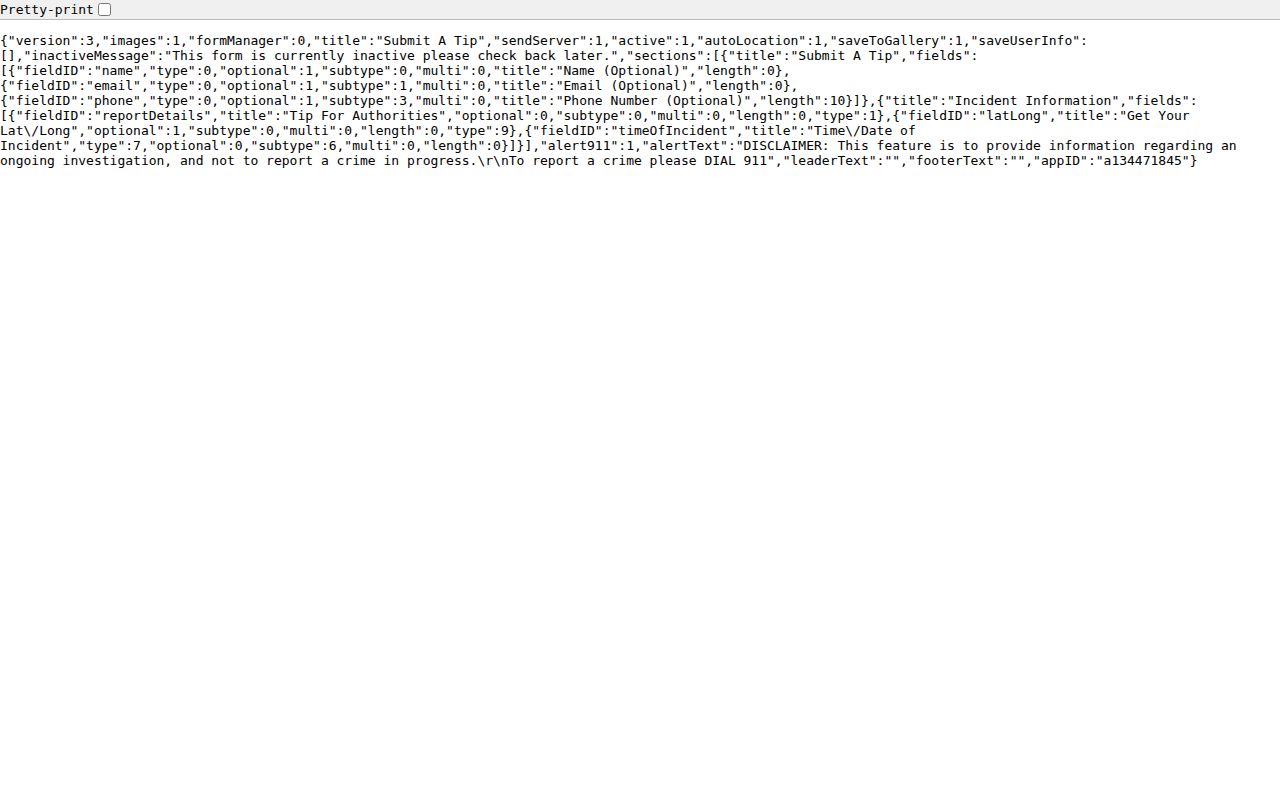
Use the agency's live form, since fields and notices can change. For nonemergency service or custody questions, call the Lafayette County Sheriff's Office at (870) 921-4252.
Most Wanted vs an Active Warrant
The two terms only partly overlap. A most-wanted program is selected public communication; an active warrant is legal process from a court, not shown as ended. Most active Lafayette County warrants never appear in the feed at all.
| Feature | Most Wanted | Active Warrant |
|---|---|---|
| Source | Sheriff's curated publication | Issuing court record and agency service data |
| Scope | Limited selected entries | Any warrant still legally outstanding |
| Public lookup | No search or sort in current app configuration | No verified full Lafayette public database |
| Confirmation | Official feed plus agency context | Issuing clerk, court docket, and sheriff as appropriate |
| Resolution | Never resolved through the publication itself | Controlled by court order, service, appearance, bond, or recall |
For the broader fallback chain, see Lafayette County active warrants.
Confirm Status Outside the Feed
Skip the feed and check the record yourself. Start at Search ARCourts. Run the exact legal name or a known case number, then open the Lafayette County results. Read each dated event and note the court department. The docket may list a warrant issued, a return, a recall, or an appearance. Coverage varies, though. For a traffic, misdemeanor, ordinance, or missed-court file in Lafayette County, call Lewisville District Court at (870) 921-5555, Bradley at (870) 894-3377, or Stamps at (870) 533-4771. Circuit Clerk Dana Phillips handles circuit criminal matters at (870) 921-4878. The sheriff, at (870) 921-4252, can speak to service or custody records. Only the issuing court can change a warrant. Arkansas publishes no statewide public active-warrant search; ACIC and NCIC stay inside law enforcement, and ARCH is a paid criminal-history service, not the right tool for a warrant check.
App Access Changed in 2025
The sheriff's office rebuilt its mobile app in 2025. The new layer pulls together court-service links, corrections information, records, the Most Wanted page, press releases, tips, forms, contacts, and inmate search. That helps in a small county. Lafayette County keeps separate court contacts in Lewisville, Bradley, and Stamps. One app now gathers them. Convenience has limits, though. The update did not add a complete warrant search or promise that warrant data refreshes on any schedule. The district courts own the docket, and the sheriff handles publication, enforcement, service, and custody. Keep those roles straight. The 2020 Census put Lafayette County's population at 6,308. That figure is geography, not a warrant count, and it says nothing about how many people sit in any agency system. Lafayette County publishes no active-warrant total, clearance rate, department table, or warrant-service report. Treat those missing numbers as a reason not to guess, not an opening to borrow unrelated arrest or offense statistics.
Lafayette Scam Alert Verification
The Lafayette County Sheriff's Office warns that impostors pose as law enforcement or court clerks. The messages demand money for warrants, fines, or tickets. The agency says it will never contact someone requesting money or gift cards. Ignore payment instructions in any threatening, unsolicited message.
Verify independently: Call LCSO dispatch at (870) 921-4252, extension #1, or the issuing clerk using an official directory number. Do not use a callback number supplied by the sender.
Verify any Lafayette County feed entry, court record, or clerk call without buying gift cards. Get the case number, the court, and the current status in writing. Then confirm the official next step.
If You Believe You Are on a List
Keep your own name off the tip form. Do not show up at an agency before you know the court's instructions. Save the official link and any case reference first. Then talk to an Arkansas lawyer. Counsel can confirm the right person and court, check whether the warrant is still active, and work with the issuing Lafayette County clerk on appearance, bond, recall, or voluntary surrender. No lawyer yet? Call the right clerk before you travel. Ask whether the record is current, what type of warrant it is, and whether a scheduled appearance is required. Lafayette County sets no uniform bond figure, surrender window, reward, amnesty term, or warrant-clearing fee. The sheriff can explain custody logistics but cannot recall a judge's order.
Important: Do not approach anyone shown in an official publication, including yourself through an agency counter without preparation. Use counsel, the issuing clerk, and official phone numbers.
Even a resolved warrant needs a paper trail. Keep the written confirmation. Then verify the latest docket entry, since a limited Lafayette County feed can drop or keep entries for reasons unrelated to legal status.